
The Ultimate Pontiac GTO Picture Site By Sean Mattingly.
There's no bigger GTO image collection anywhere!
The Ultimate Pontiac GTO Picture Site By Sean Mattingly.
There's no bigger GTO image collection anywhere!


Let's do a frame-off on a 1969 GTO hardtop In words and pictures.

 |
Page: 1 2 [ 3 ] 4 5 |  |
 If you are going to restore
a 60's car, you need a 40's car to store the parts in. Seats and small stuff are inside.
Fenders, hood and valance are on top.
If you are going to restore
a 60's car, you need a 40's car to store the parts in. Seats and small stuff are inside.
Fenders, hood and valance are on top.
 This is a perspective on a
GTO one doesn't usually see unless something has gone seriously wrong. May your finished car
never be in this orientation.
This is a perspective on a
GTO one doesn't usually see unless something has gone seriously wrong. May your finished car
never be in this orientation.
 The frame has been
exchanged for the body on the rack. Overall the frame is in good shape with only minor rust
damage.
The frame has been
exchanged for the body on the rack. Overall the frame is in good shape with only minor rust
damage.
 Here is one area where
there was rust, and it is being cleaned up and will be patched with a simple metal plate.
Here is one area where
there was rust, and it is being cleaned up and will be patched with a simple metal plate.
 The underside of the body
has been painted black. Beforehand the body was given a heavy coat of sealing primer. It was
sprayed on extra heavy in all joints, and into inaccessible areas in order to provide as much
anti-rust protection as possible. The primer is the light yellow-green. It was put on with the
body in different orientations so that it would be easier to get the hard-to-reach areas and
also the easy-to-overlook areas. Note the area around the altered AC port on the firewall.
The underside of the body
has been painted black. Beforehand the body was given a heavy coat of sealing primer. It was
sprayed on extra heavy in all joints, and into inaccessible areas in order to provide as much
anti-rust protection as possible. The primer is the light yellow-green. It was put on with the
body in different orientations so that it would be easier to get the hard-to-reach areas and
also the easy-to-overlook areas. Note the area around the altered AC port on the firewall.
 The trunk was also coated
with the sealing primer. Note how hard it is to see the joints unless you know where to look.
Also observe the note written directly on the car. A convenient place to leave reminders.
The trunk was also coated
with the sealing primer. Note how hard it is to see the joints unless you know where to look.
Also observe the note written directly on the car. A convenient place to leave reminders.
 After much soul searching
I have decided to paint the car orange and white using the style of the Royal Bobcat. Unlike
the model shown here I will make the interior Parchment. It will be a bit more noticable on the
street than I really want, but I doubt that any GTO will fade into the background. The orange
(i.e. Carousel Red) is probably the best color for GTOs, and is a very traditional color for
Hot Rods, IMHO. Even though I am using the basic scheme of the Royal Bobcat, I am not intending
it to be a
replica. This is important because the stripe end on the door has a graphic that reads "ROYAL
BOBCAT". I will need a replacement for that.
After much soul searching
I have decided to paint the car orange and white using the style of the Royal Bobcat. Unlike
the model shown here I will make the interior Parchment. It will be a bit more noticable on the
street than I really want, but I doubt that any GTO will fade into the background. The orange
(i.e. Carousel Red) is probably the best color for GTOs, and is a very traditional color for
Hot Rods, IMHO. Even though I am using the basic scheme of the Royal Bobcat, I am not intending
it to be a
replica. This is important because the stripe end on the door has a graphic that reads "ROYAL
BOBCAT". I will need a replacement for that.
 Here, the suspension
components hang waiting for primer. I glass-beaded the parts to remove rust, primer, and grime.
In the foreground you can see boxed lower control arms for the rear that I purchased used from
Potomac Classic Pontiac. They were not an original option, but were supposedly a common swap
Back In The Day. They should add some extra stiffness to the rear, and avoid the sort of
problem that might have led to the bent control arm shown earlier. By "boxed" we mean that they
are a full rectangular tube rather than the stock three-sided stamped version shown before.
Here, the suspension
components hang waiting for primer. I glass-beaded the parts to remove rust, primer, and grime.
In the foreground you can see boxed lower control arms for the rear that I purchased used from
Potomac Classic Pontiac. They were not an original option, but were supposedly a common swap
Back In The Day. They should add some extra stiffness to the rear, and avoid the sort of
problem that might have led to the bent control arm shown earlier. By "boxed" we mean that they
are a full rectangular tube rather than the stock three-sided stamped version shown before.
 The frame has been
completed and painted Chassis Black. With the installation of the fuel and brake lines it will
be ready for reuniting to the body.
The frame has been
completed and painted Chassis Black. With the installation of the fuel and brake lines it will
be ready for reuniting to the body.
 Here we see the crossmember
and front and rear anti-sway bars. The front bar (grey primer) is stock, while the rear bar I
also bought used. Since these parts are too large to fit into the glass-bead booth, I cleaned
them up with an angle grinder with sanding pads and Scotchbrite.
Here we see the crossmember
and front and rear anti-sway bars. The front bar (grey primer) is stock, while the rear bar I
also bought used. Since these parts are too large to fit into the glass-bead booth, I cleaned
them up with an angle grinder with sanding pads and Scotchbrite.
 The front suspension is
mostly complete, with the sway bar, new springs, and all new rubber.
The front suspension is
mostly complete, with the sway bar, new springs, and all new rubber.
 It took me about 2 hours
to clean up the edges and area around the bolts on the inside of the trunk lid. The outer skin
of the trunk lid is folded over and a bead of sealant was placed along it. Grinding this with
Scotchbrite and sanding disks cleaned out the old material as well as removing the old paint
and some minor rust. We sanded down to bare metal because of dirt, grime, sealant, and residue
from the trunk weatherstripping. Cleaning up this way will ensure that we get good coating with
the primer and paint. Its less important to sand the rest of the piece, as the old paint was
intact and clean. I sanded it part by hand and part by machine to ensure we had a rough clean
surface to coat.
It took me about 2 hours
to clean up the edges and area around the bolts on the inside of the trunk lid. The outer skin
of the trunk lid is folded over and a bead of sealant was placed along it. Grinding this with
Scotchbrite and sanding disks cleaned out the old material as well as removing the old paint
and some minor rust. We sanded down to bare metal because of dirt, grime, sealant, and residue
from the trunk weatherstripping. Cleaning up this way will ensure that we get good coating with
the primer and paint. Its less important to sand the rest of the piece, as the old paint was
intact and clean. I sanded it part by hand and part by machine to ensure we had a rough clean
surface to coat.
 This is a shot of the
front suspension. Compare it to pictures previously shown of this same area.
This is a shot of the
front suspension. Compare it to pictures previously shown of this same area.
 Part of the work in
repairing the door is to ensure that they fit properly. Here is a view of the bare interior
with the bare door.
Part of the work in
repairing the door is to ensure that they fit properly. Here is a view of the bare interior
with the bare door.
 This is the badly damaged
area under the windshield. Many cars have suffered this same type of damage due to water getting
trapped under the windshield beneath the trim parts. Often, potential GTO purchasers overlook
this problem area. It is very time-consuming to properly repair this area. Dave has welded
in a fabricated panel.
This is the badly damaged
area under the windshield. Many cars have suffered this same type of damage due to water getting
trapped under the windshield beneath the trim parts. Often, potential GTO purchasers overlook
this problem area. It is very time-consuming to properly repair this area. Dave has welded
in a fabricated panel.
 Closeup of the same area.
It is very difficult at this point to tell how it will look in the end. With the discolored
metal from the welding, the joints, and the ground off areas, it looks pretty rough.
Closeup of the same area.
It is very difficult at this point to tell how it will look in the end. With the discolored
metal from the welding, the joints, and the ground off areas, it looks pretty rough.
 Some repairs were needed
to the inside corners of the doors.
Some repairs were needed
to the inside corners of the doors.
 What's this? Just an
explosion-proof bellhousing. But flanged for mounting to a Chevy Big Block? What could that
mean?
What's this? Just an
explosion-proof bellhousing. But flanged for mounting to a Chevy Big Block? What could that
mean?
 Here is a view of the
inside of a panel with rust holes. From the outside it is easy to think that a rust hole is a
small defect. But in reality a hole is just a sign of major rust on the side you can't
see.
Here is a view of the
inside of a panel with rust holes. From the outside it is easy to think that a rust hole is a
small defect. But in reality a hole is just a sign of major rust on the side you can't
see.
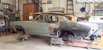 At this point we are about
one full year into the restoration. The fenders have been installed to check fit and alignment.
I'm thinking it looks good enough to hit the road, regardless of the fact that it lacks an
interior or engine, much less wheels or a rear end.
At this point we are about
one full year into the restoration. The fenders have been installed to check fit and alignment.
I'm thinking it looks good enough to hit the road, regardless of the fact that it lacks an
interior or engine, much less wheels or a rear end.
 Repair was necessary to the
trunk lock area, and well as to close up the holes where the PONTIAC chrome letters had been on
this LeMans trunk lid.
Repair was necessary to the
trunk lock area, and well as to close up the holes where the PONTIAC chrome letters had been on
this LeMans trunk lid.
 Here we are matching up
the fenders to the door to check the metalwork. A patched area of the door skin can be seen
next to an unpatched area on the front fender.
Here we are matching up
the fenders to the door to check the metalwork. A patched area of the door skin can be seen
next to an unpatched area on the front fender.
 The rear end had been sent
away for refurbishment at a local speed shop. It has returned with new high strength axles,
ready to be painted and installed.
The rear end had been sent
away for refurbishment at a local speed shop. It has returned with new high strength axles,
ready to be painted and installed.
 Here you can compare the
rusted fender to the patch panel that will be installed.
Here you can compare the
rusted fender to the patch panel that will be installed.
 The rear has been painted
and installed. It was painted a combination of gloss chassis black and "steel".
The rear has been painted
and installed. It was painted a combination of gloss chassis black and "steel".
 Here the body-work proper
begins, and we begin to accumulate some serious hours in the labor charges. Car Craft magazine
says that the more block sanding you pay for the better the finish will be. This is the way it
goes. You apply a coat of body filler, and then sand it off. Then apply, then sand. Over and
over, until low points are filled and high points reduced. This picture shows a fresh coat of
filler than has just been applied.
Here the body-work proper
begins, and we begin to accumulate some serious hours in the labor charges. Car Craft magazine
says that the more block sanding you pay for the better the finish will be. This is the way it
goes. You apply a coat of body filler, and then sand it off. Then apply, then sand. Over and
over, until low points are filled and high points reduced. This picture shows a fresh coat of
filler than has just been applied.
 Altering colors of filler
shows when you have sanded through a high point. This picture shows an "after" view, ready for
another coat of filler. Remember that body filler isn't "filler". It doesn't fill large defects,
but rather goes on as very thin coatings that make the car smoother and smoother. It will fill
up and smooth over the scars left by welding, but cannot be used as a substitute for metal. (See
the early images of the quarter panel-roof joints.)
Altering colors of filler
shows when you have sanded through a high point. This picture shows an "after" view, ready for
another coat of filler. Remember that body filler isn't "filler". It doesn't fill large defects,
but rather goes on as very thin coatings that make the car smoother and smoother. It will fill
up and smooth over the scars left by welding, but cannot be used as a substitute for metal. (See
the early images of the quarter panel-roof joints.)
 Work begins on the
interior. First the seats must be disassebled. If you intend to do this yourself, get first a
good set of hog-ring cutters. They save a lot of work. Save the seat covers until you are done,
no matter how seedy they are. You will need to refer to them to see how to reassemble the new
covers. Work on one seat at a time. Leave the other fully assembled for reference. Once you
have one completed, then work on the second, using the first as reference.
Work begins on the
interior. First the seats must be disassebled. If you intend to do this yourself, get first a
good set of hog-ring cutters. They save a lot of work. Save the seat covers until you are done,
no matter how seedy they are. You will need to refer to them to see how to reassemble the new
covers. Work on one seat at a time. Leave the other fully assembled for reference. Once you
have one completed, then work on the second, using the first as reference.
 These are the original seat
covers, as evidenced by the date stamped on the underside: 10 February 1969. Is 7737586 a GM
part number? Remember you Concours people: your car better have correct markings inside the
seats or the judge will deduct points. (Ha Ha.)
These are the original seat
covers, as evidenced by the date stamped on the underside: 10 February 1969. Is 7737586 a GM
part number? Remember you Concours people: your car better have correct markings inside the
seats or the judge will deduct points. (Ha Ha.)
 Anyone remember punch
cards? This one was found between the springs and the seat back. There are numbers visible on
it that I think refer to color and style options.
Anyone remember punch
cards? This one was found between the springs and the seat back. There are numbers visible on
it that I think refer to color and style options. |
Page: 1 2 [ 3 ] 4 5 | |
| ||||